Give the ottoman one clear job
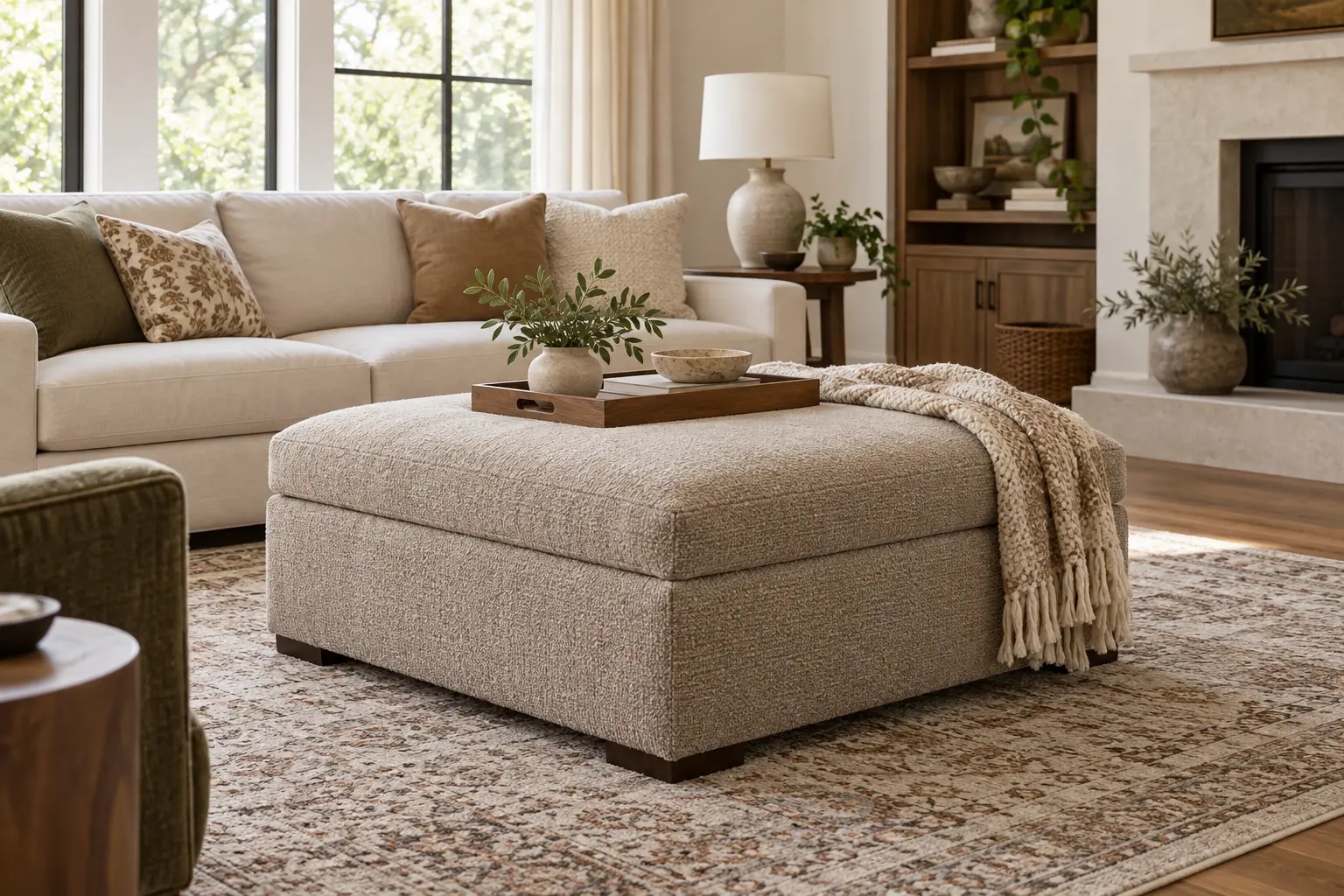
An oversized square storage ottoman may function as a footrest, coffee-table substitute, spare seat, blanket chest, or a combination of those roles. Decide which use matters most before comparing fabric or color. A low ottoman can be comfortable for feet and difficult to use as a seat; a taller piece can support a tray while changing the sightline across the room.
Storage volume is useful only when the lid can open and the contents remain manageable. Measure the blankets, games, toys, or cushions you actually plan to store. A deep empty box is not automatically better if the room needs frequent access and the lid is heavy.
Measure the full living-room footprint
Measure the ottoman closed, then mark the space needed to walk around it and open the lid. Include sofa depth, rug edges, door swings, and the route from the seating area to the kitchen or hallway. A square footprint can be efficient in front of a sectional and awkward in front of a narrow sofa.
Check the distance from the sofa so legs can rest comfortably without the ottoman becoming a trip hazard. A tray can create a temporary table, but people still need room to stand and pass. Use tape to test the furniture before ordering.
Compare height, top construction, and load
The finished height should work with the sofa seat and the people using it. A very low ottoman may force the knees upward when used as a seat; a tall one can obstruct the view or feel like a second table. Compare the top thickness, padding, and edge shape because they change both comfort and usable surface.
A storage ottoman has separate load questions for the lid, the internal box, and any feet or frame. Read the manufacturer’s guidance for sitting, placing a tray, and storing items. Do not use the lid as a step unless the product is explicitly designed for that purpose.
Inspect the storage access
Lift-top, hinged, removable-lid, and split-lid designs create different routines. A hinged lid needs rear clearance and may require two hands. A removable lid is simple but needs a place to rest. A split lid can allow one person to reach the contents while someone else sits nearby, though it adds seams and hardware.
Look for a lid stop, finger clearance, hinge protection, and soft-close behavior if supplied. Check whether the inside is lined and whether the base sits directly on the floor. A raised base can make cleaning easier, while a low box may contain crumbs and pet hair.
Choose upholstery for the household
Fabric, faux leather, leather, and performance textiles each change the care plan. Examine the weave, seam placement, cushion construction, and cleaning code. A pale nubby fabric may suit a calm room and show marks quickly. A smooth surface may wipe more easily while showing scratches or pressure changes.
Think about pets, children, shoes, drinks, and the frequency of vacuuming. A removable cover can be useful only when the maker provides clear washing or replacement instructions. Avoid assuming that a stain-resistant description means every spill can be ignored; follow the stated care method.
Plan delivery and assembly
Large ottomans need a delivery route. Measure doors, stair turns, elevator interiors, and the narrowest hallway. Confirm whether the feet arrive separately and whether the box can be opened in the room without damaging the upholstery. Keep packaging until the piece is stable and the fit is confirmed.
Check return conditions before assembly, including restocking, pickup, and damage reporting. Level the feet on the actual floor and test the lid, hinges, and seat before loading the interior. A furniture return becomes more complex once the packaging is gone.
Final storage-ottoman checklist
Before ordering, confirm closed dimensions, open-lid clearance, height, internal dimensions, lid type, load guidance, upholstery, cleaning code, feet, assembly, package size, delivery route, anchoring if relevant, and returns. Mark the ottoman and lid arc on the floor with tape.
The best oversized square storage ottoman adds usable seating and storage without consuming the room’s circulation. Choose the size around the sofa and the lid around the routine. The finish comes last, after access and stability are solved.